
As we head towards winter, you might notice a few changes in your houseplants. Yellowing leaves, slower growth or the odd unwanted visitor can all appear at this time of year. But don’t worry! Spotting the signs early can help you keep your leafy friends looking their best throughout the colder months.
Here are some common houseplant problems to look out for this November, along with a few simple tips to help.
Yellowing Leaves
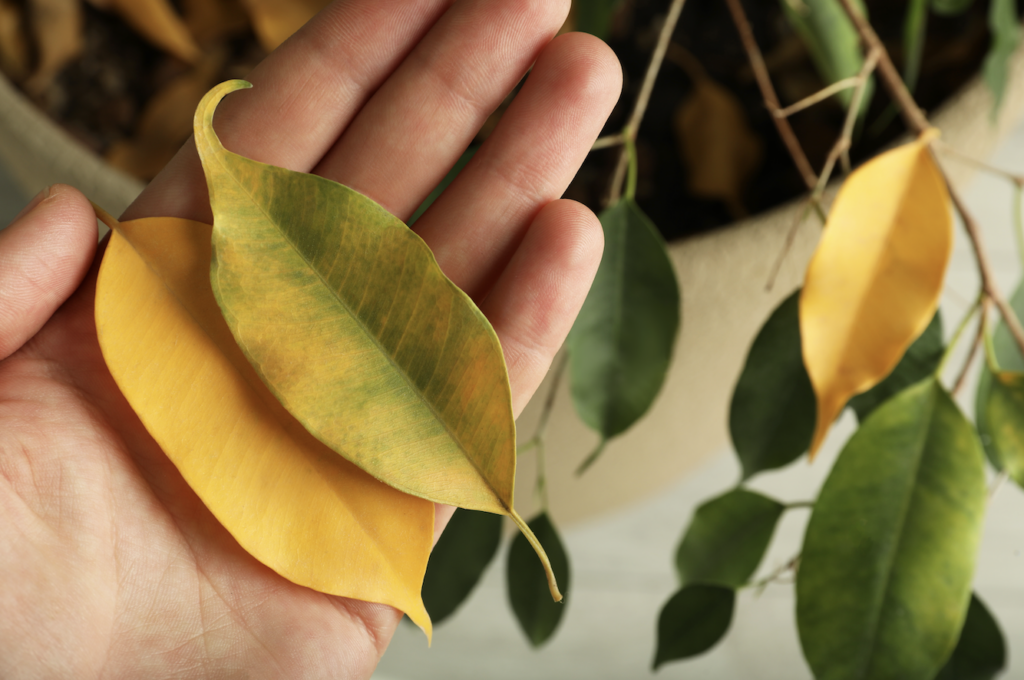
Noticing yellow leaves on your favourite plant? This can happen for several reasons, including overwatering, poor drainage, a lack of light or simply the natural ageing of older leaves.
What to do: Check the compost before watering and make sure excess water can drain away. Remove any fully yellow leaves and consider whether your plant would benefit from a brighter spot.
Pesky Fungus Gnats
Small flies hovering around your houseplants can be a nuisance, particularly when compost stays damp for too long. These are often fungus gnats, which thrive in moist growing conditions.
What to do: Before watering, gently push your finger about 2–3 cm into the compost. If it still feels damp, wait a few more days before checking again. If it feels dry, your plant may be ready for a drink. For smaller pots, you can also lift the pot to see how heavy it feels — dry compost is much lighter than wet compost.
Remember, some plants prefer to dry out more than others, so always check the needs of your plant.
Yellow sticky traps using products from Zero In, Fly Max can help catch adult fungus gnats, while adjusting your watering routine can help tackle the cause.
Signs of Root Rot
Overly wet compost can leave roots struggling for oxygen and may lead to root rot. Watch out for persistently wet soil, yellowing leaves, wilting despite damp compost or a musty smell.
What to do: Check that the pot has drainage holes and never leave your plant sitting in water. If you suspect root rot, inspect the roots and remove any that are soft or mushy before repotting into fresh, suitable compost if needed.
Slow or Stretched Growth
Shorter days mean many houseplants naturally slow down during winter. However, if your plant is becoming unusually leggy, with long stems and widely spaced leaves, it may be struggling to find enough light.
What to do: Move it to a brighter position suited to its needs and rotate the pot occasionally for more even growth. Avoid encouraging new growth with extra fertiliser when light levels are low.
Brown Leaf Tips and Edges
Dry, brown tips can be caused by low humidity, irregular watering or a build-up of salts in the compost. Some plants are more sensitive than others, so it’s worth looking at their individual needs.
What to do: Check that you’re watering your plant correctly, as both overwatering and underwatering can cause brown leaf tips. Some tropical houseplants, such as Calatheas and ferns, prefer higher humidity. Signs that the air may be too dry include crispy brown leaf edges and tips, particularly if the compost isn’t drying out too quickly. You could try grouping humidity-loving plants together or using a humidifier nearby. Trim brown tips neatly with clean scissors, following the natural shape of the leaf.
A Little Attention Now Goes a Long Way!
Every houseplant has its own needs and a change in appearance doesn’t always mean something is seriously wrong. Take a closer look, check the growing conditions and adjust gradually rather than changing everything at once.
With a little detective work this November, you can help your houseplants stay healthy and ready for the seasons ahead.
Need a helping hand with a troublesome plant?
Pop in and speak to our team for advice or browse our range of houseplants and growing essentials. We’re always happy to help your indoor jungle thrive!
Our next Houseplant Drop-in Clinic is on Saturday 14th November 11am – 3pm.